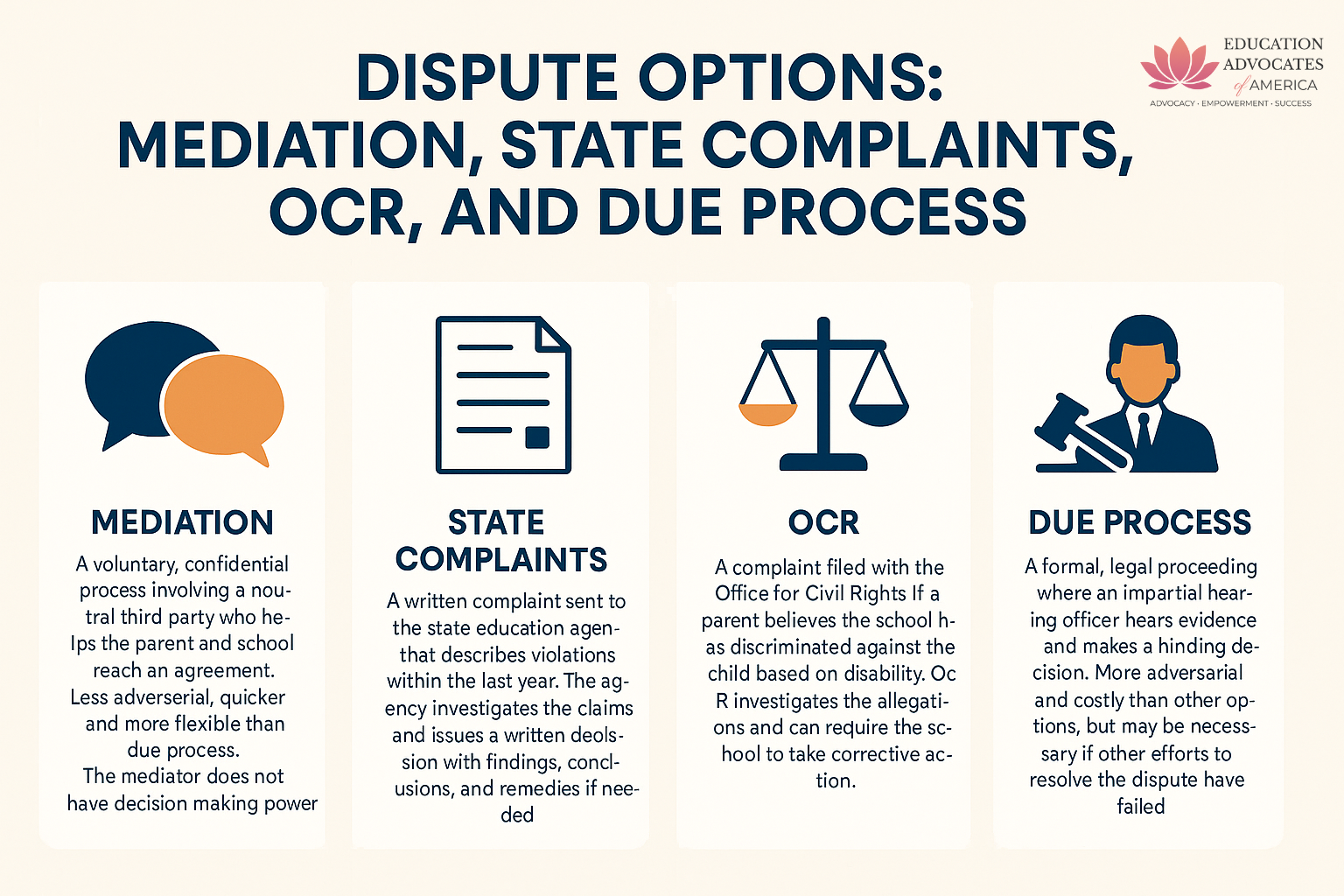
Dispute Options: Mediation, State Complaints, OCR, and Due Process Understanding Your Choices When You and the School Disagree
By: Dr. Gabrielle Baker, President & Advocate

When a school is not following a child’s IEP, refuses to evaluate, denies services, or simply will not work collaboratively, families often feel stuck. The good news is that IDEA, Section 504, and federal civil rights laws give parents several options to resolve disputes. Each option serves a different purpose, and knowing which one to use can save time, stress, and ensure your child gets the support they need.
Mediation
Mediation is often the quickest and least adversarial option. A neutral mediator helps both sides discuss the issue and try to reach an agreement. Mediation is voluntary, confidential, and can be scheduled much faster than a due process hearing. Because the mediator cannot force a decision, both parties must be willing to problem-solve together. This is a good option when communication has broken down but everyone is still willing to work toward a solution.
State Complaints
A state complaint is a written allegation sent to your state education agency describing how a school has violated IDEA within the past year. The state investigates, reviews documents, interviews staff, and issues a written decision with findings and required corrective actions if violations occurred. State complaints are especially helpful when the issue involves procedural violations, failure to implement the IEP, missed services, delays, or patterns of noncompliance. They do not require attorneys and do not involve a hearing.
OCR Complaints
If you believe the school has discriminated against your child based on disability, you can file a complaint with the U.S. Department of Education’s Office for Civil Rights (OCR). OCR investigates discrimination, unequal treatment, retaliation, or barriers to access. OCR cannot force a school to write or change an IEP, but it can require corrective action when civil rights laws are violated. This option is useful for issues like inaccessible buildings, denied accommodations, unequal discipline, or retaliation after advocacy.
Due Process
Due process is the most formal and legally intensive option. It is similar to a trial, where both sides present evidence and witnesses in front of an impartial hearing officer. The decision is legally binding. Due process is typically used for disputes about eligibility, placement, services, discipline, or when other attempts to resolve the issue have failed. Because it is time-consuming and adversarial, families usually use this route only when the disagreement is significant and cannot be resolved any other way.
Choosing the Right Path
No single dispute option works for every situation. Many families start with mediation or a state complaint, and reserve due process for higher-stakes issues. OCR is particularly helpful when discrimination or retaliation is suspected. What matters most is taking action when your child’s needs are not being met.
Understanding these tools empowers families to advocate confidently, protect their child’s rights, and ensure the school remains accountable. If you’re unsure which direction to take, reach out. Supporting families through these decisions is exactly what we’re here for.